Start a Conversation

Services

Adaptive ReuseMultifamilyOffice‑to‑ResidentialSenior LivingHospitality & Mixed-UsePreconstructionView All Services

Projects

The NationalCathedral GuadalupeKnox StreetView All Projects

Proof

RecognitionLeadershipEmployee OwnershipInsights

Locations

Dallas–Fort WorthHoustonAustin

Company

AboutThe ANDRES WayCareers

Contact

214.521.2118

Owners build differently.

Start a Conversation

3710 Rawlins, Suite 1510
Dallas, TX 75219

Service pillar

$950M Portfolio. 18 Projects. Zero Texas Competitors.

Overview

ANDREShascompleted18adaptivereuseprojectstotaling$950millionand2,956unitsspanningresidential,hospitality,institutional,andmixed-use.NootherTexasgeneralcontractordocumentsacomparableportfolio.Themarketisheadedfrom$22Bto$95Bby2034.Dallasrankssecondnationallyinoffice-to-apartmentconversions.ANDRESownsthiscategory.

Adaptive Reuse at a glance

18
Adaptive reuse projects completed
$950M
Total portfolio value
2,956
Units and keys delivered
$94.6B
Projected market size by 2034
Every adaptive reuse project is a bet against hidden conditions. The drawings are wrong. The structure has been modified. The materials don't match any current spec. Labor represents 60% of adaptive reuse costs — and the labor that matters most is judgment, not hours.

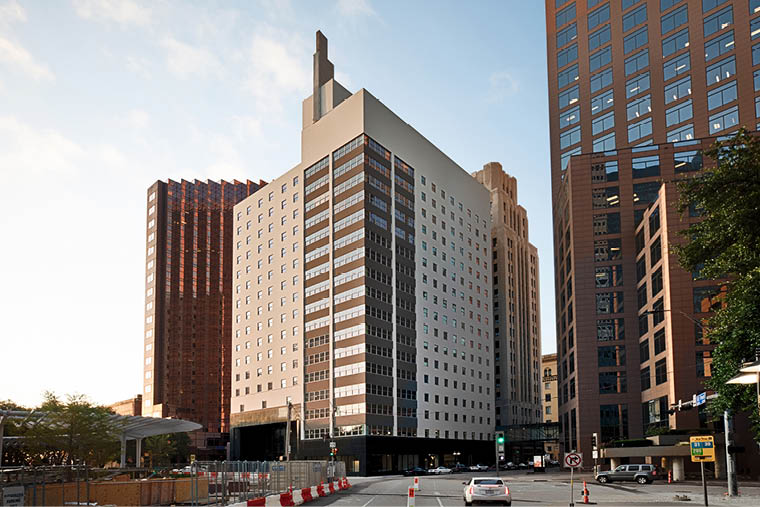
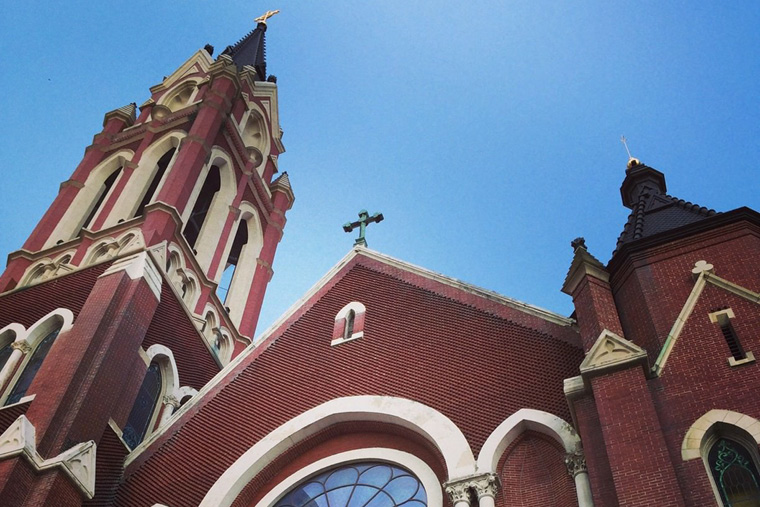
ANDRES has navigated $100M in historic tax credit compliance, three ownership changes on a single project, and construction inside a 100-year-old active cathedral. The complexity tax is real. The question is whether your contractor has paid it before.

Learn More
The Complexity Tax — Adaptive Reuse project work by ANDRES Construction, Texas

Texas offers combined federal and state historic rehabilitation tax credits worth up to 45% of qualified rehabilitation costs — among the most generous nationally. But the compliance path is narrow. Every material decision, every detail, every modification must be documented and approved through a parallel NPS regulatory process.

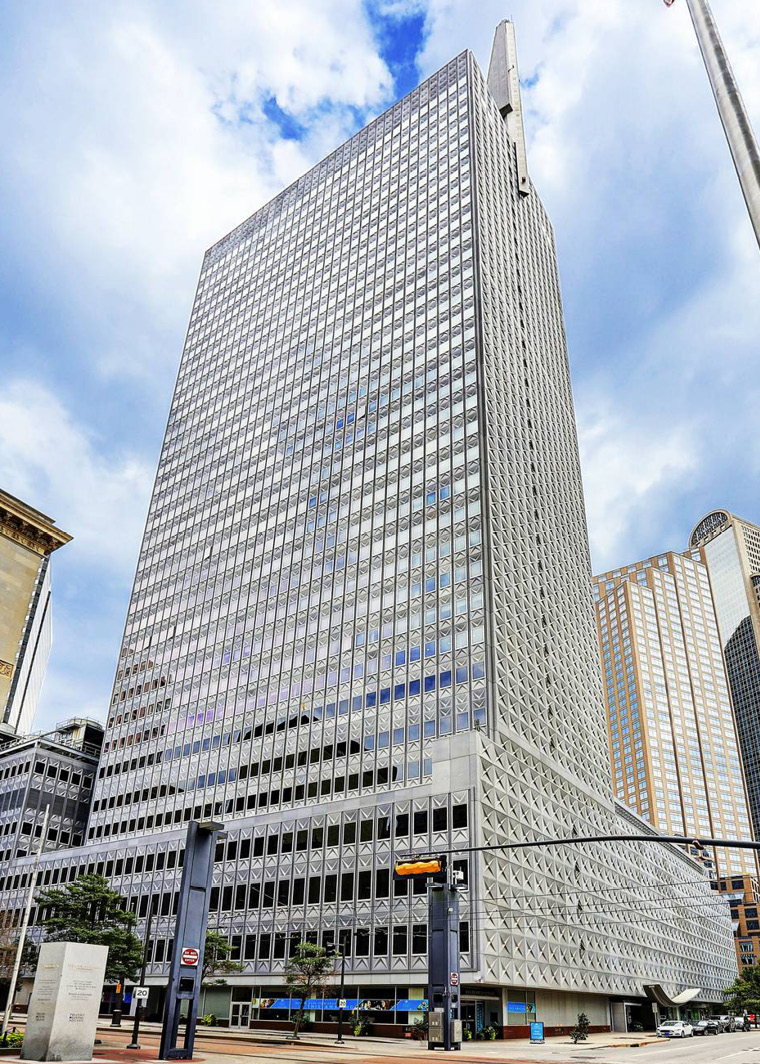
ANDRES has managed the largest historic tax credit transaction in Texas history — $100M on The National. That institutional knowledge compounds. The learning curve doesn't reset because the team doesn't turn over.

Learn More
Historic Tax Credits — Adaptive Reuse project work by ANDRES Construction, Texas

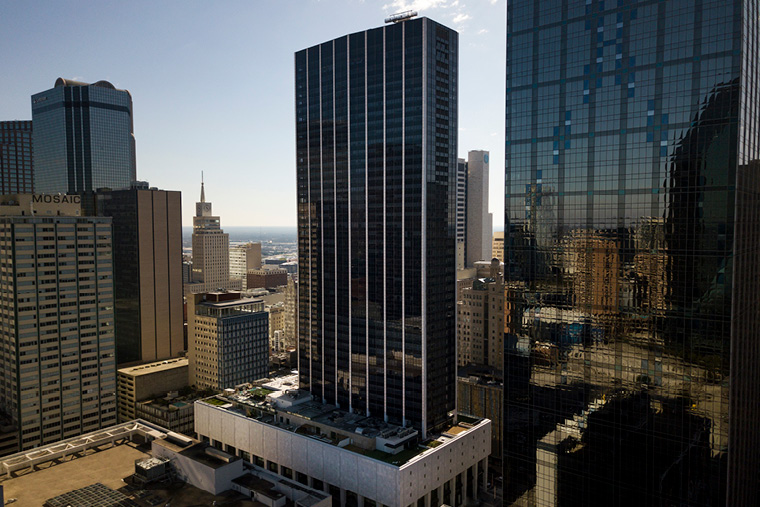
The DFW office vacancy rate sits at 26%, creating a massive funnel of buildings needing new life. Office-to-residential conversions have tripled since 2022, reaching 70,700+ units in the national pipeline. Dallas ranks second — just four units behind Manhattan.

SB 840 allows residential construction in commercial zones without rezoning. SB 2477 exempts office-to-residential conversions from impact fees, public hearings, parking minimums, and traffic studies. The legislative environment is accelerating directly toward ANDRES's strongest capabilities.

Learn More
Office‑to‑Residential — Adaptive Reuse project work by ANDRES Construction, Texas

The superintendent who started The National finished The National — through three ownership changes and the largest HTC compliance process in Texas. The PM who ran Cathedral Guadalupe still works at ANDRES. The foreman from Gables Republic Tower led Corrigan Tower a decade later.

In adaptive reuse, institutional knowledge isn't a nice-to-have. It's the difference between a $100M tax credit and a $100M liability. The ESOP structure that keeps this team together isn't a perk — it's the mechanism that keeps the people who've already solved it.

Learn More
Why the Team Matters Most — Adaptive Reuse project work by ANDRES Construction, Texas

Market Context

$22B → $95B
Adaptive reuse market by 2034 — 4x growth in a decade
70,700+
Office-to-residential units in national pipeline (3x since 2022)
#2
Dallas rank in office-to-apartment conversions (behind Manhattan by 4 units)
26%
DFW office vacancy rate — massive funnel of buildings needing new life
45%
Combined federal + state historic rehab tax credits in Texas
SB 840 + SB 2477
Legislative tailwinds exempting conversions from rezoning and impact fees

Adaptive Reuse in your city

Your Building Has a Story.

ANDRES has restored and adapted 18 historic structures across Texas. If your project demands a contractor who treats irreplaceable architecture with the seriousness it deserves, start here.

Questions developers ask before they sign

How do you price an adaptive reuse project when nobody knows what’s behind the walls yet?

The honest answer is that the price has a known part and an unknown part, and we tell developers which is which. On the Cabana — a 1960s hotel-to-residential conversion in the Design District — partial abatement and demo had already been done before we started, and a state report flagged lead paint, asbestos in roof flashing, and mold. We price the work we can see, then we contingency the work we cannot, and we staff the project, in Carlos Trevino’s words, "with enough on-site supervision and experienced administrative side to be able to react, communicate, and create plans."

What kind of unforeseen conditions actually show up on these conversions?

The ones nobody draws. On Cabana, roof flashing tested positive for asbestos and the adhesion was so strong that stripping it brought the masonry parapet walls down with it. On the pool deck, drilling to dowel new connections kept hitting rebar cages that were essentially solid steel — column rebar lapped into beams, beams lapped into each other, and there was nowhere to poke through. That single condition became the project’s largest schedule risk. None of it appeared on a drawing.

Why is column tolerance such a big deal in an old building?

In new construction, you set the grid. In adaptive reuse, you inherit it. A column that’s half an inch off-level with quarter-inch clearance leaves you almost no options — you frame studs and set drywall to the worst tolerance point, and the offset cascades through the entire dimensional string, down the corridor, past the bathroom wall. Every apartment ends up built around columns nobody can move. That’s why adaptive reuse takes a PM who has done it before, not one learning on your building.

Will my historic facade survive the conversion?

That is a scope decision and a sequencing decision. On Cabana’s back-of-house conversion, we kept the top ledge of brick so the facade still read as original — and to do that, every individual brick in the way was removed, palletized, cleaned, and reinstalled. Every brick that didn’t have to come down stayed. That work lives at the intersection of preservation craft and structural engineering. It is not a finish trade.

How do TIF and historic tax credits fit into adaptive reuse economics?

A Tax Increment Fund reinvests a tax surplus to bring abandoned buildings back online — empty buildings depress district value, and a completed, occupied one starts producing tax revenue again. The math is simple in dense downtown districts. Texas SB 840 and SB 2477 layered ~45% tax credits onto adaptive reuse work, which is part of why a $94.6B national category is growing at ~15% a year. Our job is to build to the schedule the credit window assumes — Cabana’s TCO targets Q1 close because the owner needs the tax credits to land in the right window.

What’s the difference between a GC who has done five adaptive reuse projects and one who has done fifty?

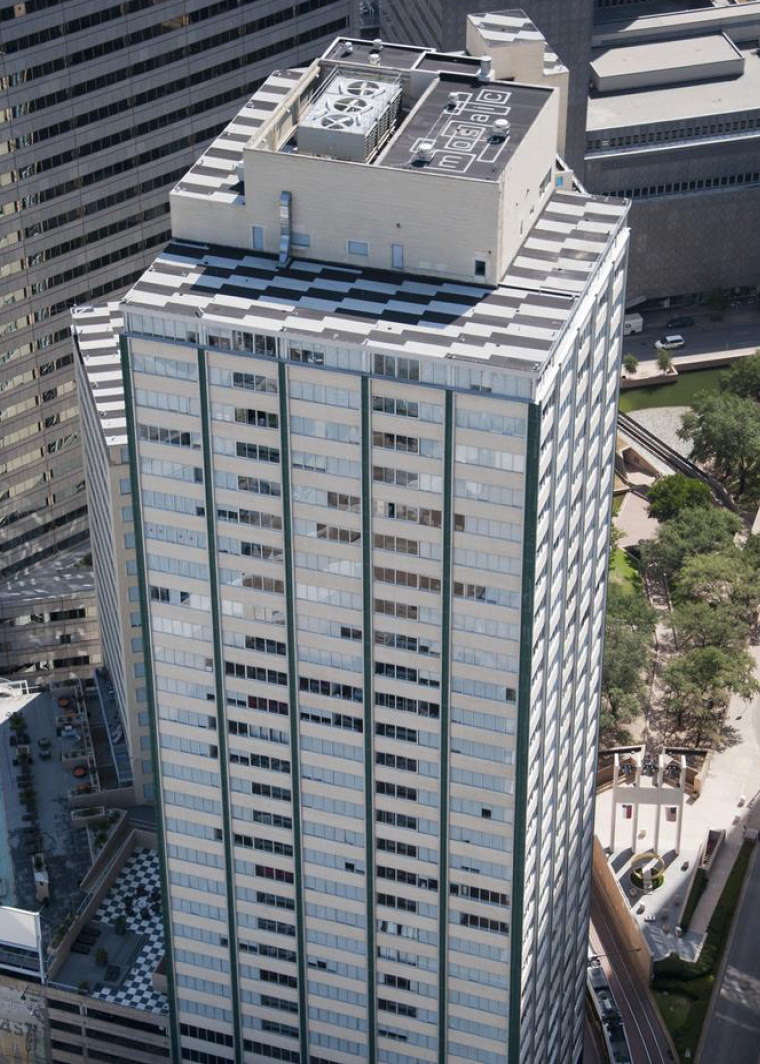
The fifty-project GC stops being surprised. Carlos started on his dad’s crew at 19 and worked Mosaic — an adaptive reuse — in 2007 as an A&M intern at ANDRES. The team carries 15 to 25 years of pattern recognition: what an oversized rebar cage looks like when you drill into one, why a column offset compounds the way it does, when to repair a pool deck and when to demo and replace with a new post-tensioned slab. Adaptive reuse is a craft you cannot fast-track.

Who picks up the phone when something unexpected shows up at 2pm on a Tuesday?

The same Senior PM you met in the pitch. ANDRES is employee-owned, which changes who is in the room and who stays in the room. The trade partner relationships matter too — Southside Environmental held both the demo contract with us and the owner’s environmental remediation contract on Cabana because their owner has worked with Greg Manao for 20+ years, back to Mosaic in 2007. When the asbestos pulled the parapet down, the team that fixed it had been working together since before the building’s first conversion.