Senior Living in Houston — market context
The U.S. senior living shortfall runs 595,000 units by 2030. The investment gap is $275 billion. Houston carries demographic weight that puts it on the front edge of that demand: an aging population, healthcare infrastructure concentration, and rapid metro growth. The construction problem in Houston is not just delivery — it’s coordinating Texas Health and Human Services Commission (HHSC) licensing alongside city inspections, in a permitting environment that varies by jurisdiction. Memory care construction adds another layer: delayed-egress door hardware, key-card elevator access, wander management embedded in walls, alarmed stairwell logging.
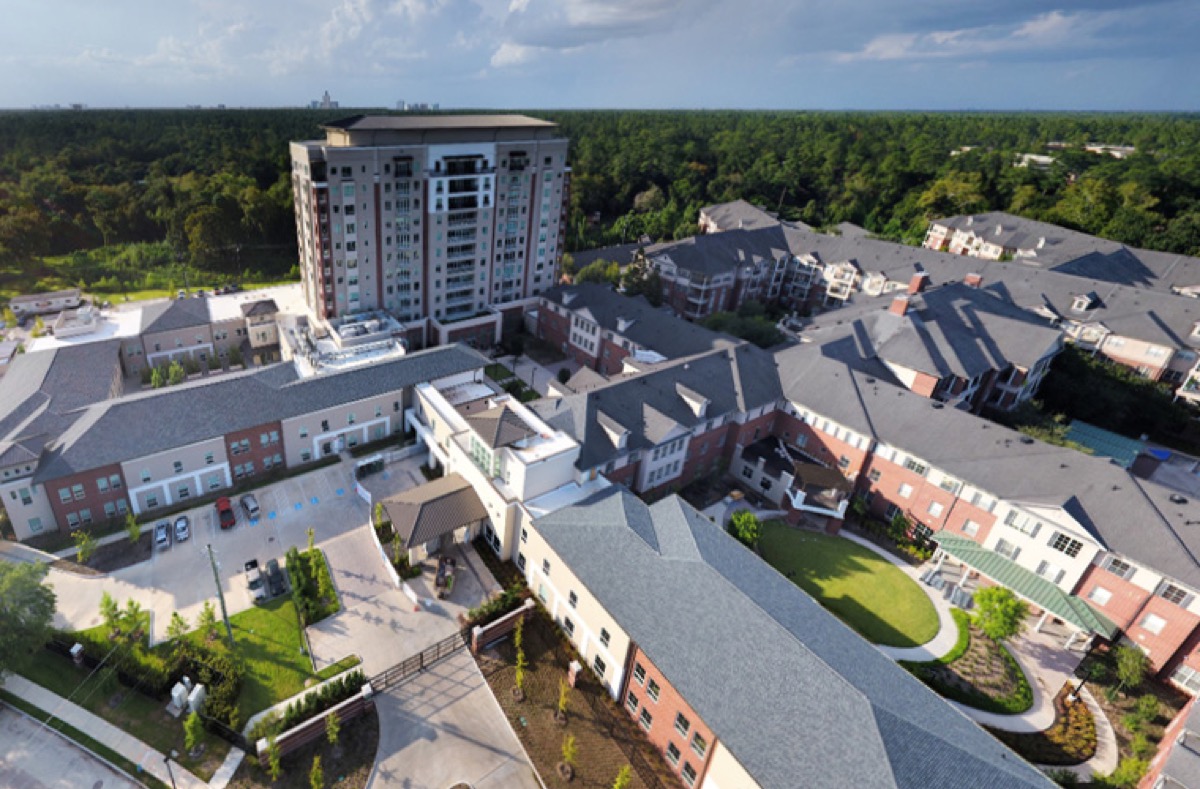
ANDRES has delivered four CCRCs across Texas — The Stayton in Fort Worth, Edgemere in Preston Hollow, Touchmark at Emerald Lake in McKinney, and Vivante Turtle Creek in Dallas. In Houston, the Buckingham CCRC project ran additions and renovations to the existing campus, delivered 2020. The Edgemere relationship spans original build, expansion, and modification — three engagements, same operator, residents in place every time. The institutional knowledge that lets construction run inside an occupied senior living community is portable across markets, and ANDRES has it documented across Texas.
Senior living construction around occupied residents is fundamentally different from hotel or apartment occupied construction. The population is medically vulnerable. Noise, vibration, dust, and access disruption carry health implications. The HHSC inspection is a separate finish line behind TCO — life safety, medication storage and distribution, memory care containment, kitchen and dining for institutional food service, ADA-plus accessibility specific to assisted living. On Vivante in Dallas, ANDRES brought in a third-party HHSC and fire safety consultant to review every sheet pre-construction. That methodology travels.